
The Callsheet sat down with Gauteng Film Commission CEO Keitumetse “Tumi” Lebaka to discuss industry development, attracting investment, empowering local filmmakers, and the Commission’s vision for positioning Gauteng as Africa’s leading film destination.
Since being appointed CEO of Gauteng Film Commission in 2022, what has been your primary vision for positioning Gauteng as a leading film destination locally and internationally?
So from around 2022, my core vision for the Gauteng Film Commission has been to position GFC as a premium film location and television and creative hub, and also create a destination where various diverse storytellers tell modern authentic stories driven by digital innovation and modern production. We know with the advent of AI that there’s a lot of development, but also building an inclusive, creative ecosystem that drives job creation because that is quite important for the industry. Also, that strengthens local business and positions South African cinema as a global force.
And we can start seeing this by the likes of The Polygamist that has now hit Netflix, because everybody globally is talking about that. But more than that, our strategic framework has about nine key outcomes, and they are aligned to our Gauteng government priorities, what we call Growing Gauteng Together as part of the 2030 vision. And we are looking into moving past just attracting temporary productions, and focusing on a really high, sustainable, resilient industry that tells our authentic African stories.
So for us, that is important because we believe that Gauteng is such a hub with so much talent. So if we start sharing our stories, like we’ve just spoken about The Polygamist, you can see how wide and how far it reaches.
In an increasingly competitive film industry, what would you say are the unique selling points of coming to Gauteng to film your commercial, your TV series, or your film?
Well, Gauteng is just a melting pot by itself. We have great talent, great infrastructure, great technical crews that we find are also in demand globally. But what’s also more important to note is that about 80% of registered producers in South Africa are in Gauteng in particular, which tells you that Gauteng in itself gives you diverse filming locations, world-class studios, and excellent regional connectivity.
You know, one of the things that we used to boast of is, compared to other parts of the country, would be our weather. So that would be important, particularly for global markets when they do come to shoot in South Africa, and particularly in Gauteng. The weather stability is important.
But what is also important is we are aggressively strengthening our global edge against regional competitors. We are working very hard to formalise filming locations. We’re targeting about three filming agencies by the end of this year, which means, among others, we’re looking into professionalising scouting and streamlining municipal permit processes so that they are easy for those looking for such. So for us, that is important.
Also, what is key for us is increasing the production spend by the end of next year, which is currently sitting at about R305 million. So if we can push that to R385 million by the end of next year, we believe that would be a great achievement.
We’re also actively looking into strategic broadcast and digital platforms to secure market access for local content. Because I think we all know that you may have great content, but if you don’t have distribution channels, it’s not really going to take us anywhere. And among others, we’re looking into the short film sector, where be it in Gautrain, be it in a taxi, or you are being chauffeur driven in your Uber, you can start watching these short films. So we are looking heavily on that.
We’re also automating our internal processes, particularly for those who apply for our funding in Gauteng, so that it’s more attractive. Part of what we are looking for in the long term would be having a provincial incentive plan that will attract international markets. So those are the, I believe, what I would call the key attracting factors to Gauteng.
Skills development and transformation is always top of the agenda for South Africa, especially in the creative industry. What is GFC doing to help emerging filmmakers?
Well, skills development is indeed important in our industry. But also what’s equally important is making sure that we just don’t skill our creatives, but we also give them skills that they can implement. So we have a target where we look into accredited and non-accredited training.
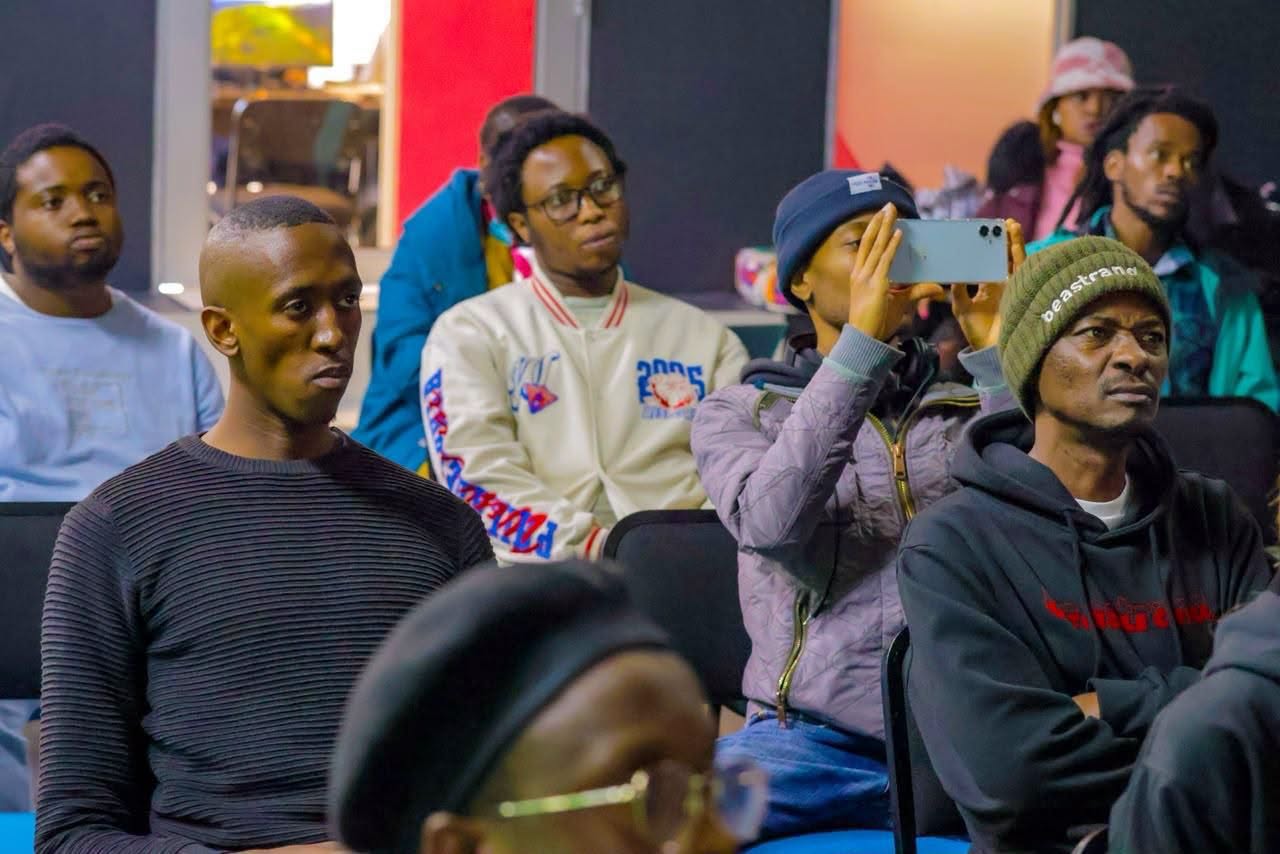
We also venture into our masterclasses where we bring experts on board. These experts will be talking about different areas in film that will help commercialise or help increase skills. So for our non-accredited training, this is where we say it’s hands-on skills transfer, experts leading the sessions, whereas the accredited training would then follow a different methodology. So for the next year, we’ve got about six of these planned. Of which we are very deliberate looking into our sector being a gig economy, being also youth attractive.
In terms of our target, the people that we’re looking into training is 40% youth, 40% women, and that is important for us because the numbers still in the industry, particularly directors and producers, are not really as favourable at the top. In fact, yesterday I read a McKinsey report that was showing that at the upper echelon of leadership, you’re starting to see a decline. So it’s important that as GFC, we start playing a role for female directors and filmmakers to take a lead.
But also what is important, a project that we’ve implemented from last year, is our film incubation project. Why is that important? Because we saw that, yes, there is talent, but some of this content is not commercial-ready. And some of the filmmakers or creators do not have the full skills for them to be sustainable and last in the industry.
So for the last financial year, we did about 10 emerging artists. We are looking into supporting 20 more. We are in partnership with the Gauteng Enterprise Propeller (GEP) (which promotes, fosters and develops small enterprises in Gauteng).
We’re coming together with the NYDA (National Youth Development Agency) as well to create a bigger pool of incubation for filmmakers, which for us this particular year is a very important project that will, among others, involve mentors coming on board, coaching coming on board, practical training, shadowing, and making sure that the best skills that our emerging filmmakers have that.
We also support what we call emerging SMEs in a programme called Enterprise Support. And that is important because we can give you all the skills, we can bring all the experts, but if you don’t have equipment at the end of the day, there’s still a gap in the business. So we provide essential gear and equipment for resource finding. About two weeks ago, we were handing out drones for those interested, software, as well as cameras. And what is important is we are looking into the quality that is comparable with the Netflix production, SABC production, so that once you have this product, you still don’t have to go an extra mile to go higher. So this makes it effective for our filmmakers.
From a tech point of view, we are looking into what we call the immersive and innovation collaborative projects like virtual reality, augmented reality, and gaming hackathons, because this, for us, is important for our youth from a digital first production environment.
I did indicate earlier that we are supporting micro dramas and productions, and these are important for us because we believe that we need to optimize some of these digital platforms. So that becomes our focus as well in the next coming months and possibly years.
If you look into the Chinese model, you will note that they made a number of billions from the micro dramas and short films so if we can activate that market in South Africa, that would be great. And it will speak directly to issues of increase in business for production, job creation, and also more profit for productions to have sufficient funding for the next coming production. Because in South Africa, because we are a developing country, issue of funding still plays a big role.
Talking about money, so beyond the direct economic benefits of having a film industry, how do you see the sector contributing to Gauteng’s broader economic plans and objectives?
One of the things to note is more and more young people are gravitating to creative industries. You start seeing it with the poppers that you are seeing. You start seeing it. It’s always so interesting that after there’s a worthy news or something, there’s animation either mimicking or doing all of that. You start seeing animation now in our native language that never used to really be there. So this sector really plays an important role. And from an economic point of view, filmmaking is a great multiplier.
So for every one rand that we spend, it generates about 2.5 rands. So you will just see it’s almost tripled. And this is because it touches on other areas. So when you’re just filming, it touches on makeup, it touches on wardrobe, it touches on catering, it touches on hospitality. So it’s really a great multiplier. So for us, that becomes a key benefit because you’re not only targeting one industry, it’s multi-industry across the value chain.
So from a GFC point of view, we aim to, by end of 2028/29, support about 1,000 new jobs. This is just GFC, not all other entities around the creatives. So that becomes our target.
We’re also looking into enhancing the cultural and tourism heritage. So among others, we’re supporting two dedicated audio-visual projects that look into how to start preserving our rich heritage and culture of tourism in South Africa. So embedding tourism in what we do is quite important because, I mean, if you look into people who want to go to Paris, they’ll go to Paris because there’s an Eiffel Tower. So for us, there is the Nelson Mandela Bridge, there is the Joburg Tower, there’s just so many attractive points that we even say the more we showcase our location, the more we start attracting.
And going back to the recent The Polygamist series that has really started going viral, you see more and more people are saying, we did not know that black Africans live like this, so we’d like to start visiting. So the tourism part of film is very important.
But key and important as well, we’re also looking into ways of expanding audience development. We started seeing that just post-COVID, you know, the culture of going to the cinema started dying. We are working with cinemas to say, How do we start reviving this? We are going into communities just to revive the love of watching films.
And you would be surprised that we still have places here in Gauteng where the young people have not even had the opportunity of seeing the inside of a cinema. So it’s important to create that love and start showcasing that.
But important for us as well is partnership with private sector in order to grow the budget of Gauteng, but also in order to leverage on other opportunities that may exist. So that is also part of our strategy to date.
So looking ahead, what would you want the Gauteng film industry to look like in five years’ time?
In five years’ time, from a GFC point of view, we are in a transition process where we’re moving it just from an NPC to a public entity that would allow Treasury to start funding the creative economy, that would also allow better governance and prioritization. So it’s one of the things that we’ve been working on the last two, three years. So I am hoping that by the end of 2026, 2027, we would have finalized that process because it puts it in a better place from a funding perspective, from a governance perspective, also from a global funding perspective. So we’re looking into that.
We’re also looking into making sure that we maintain our clean audit, because when organisations want to fund, they want to make sure that the monies that we are bringing into your organisation can be audited. You can be able to follow the money. These monies are not really wasted. So the issue of financial integrity is one that we will continue strengthening over the next couple of years.
But also important, and I had said earlier, we want to try to see how do we facilitate the increase of production spend. We’re currently sitting at about R305 million. If we can move it close to R400 million by 2028, 2029, it would be important because what this means is that investors are starting to invest in the local production.
But I’m also hoping that with the great spotlight that has been on our industry in the last two weeks because I really see it as a blessing, I am hoping that, among others, we’ll start getting attraction from our producers’ point of view to start leading global productions, from also directors as well, because the film was wonderfully directed, but also from a creative practitioner point of view because we’ve got great immense talent. So I am hoping that some of these global films that we are making and some of these authentic stories will start opening market access.
Like we said, you know, it doesn’t serve us well if we have this great film, however, it’s sitting on the shelf. It’s not going on any platform. We are very, very deliberate in our partnership as well.

With Netflix, we’ve just launched the Screencraft Pathways. We’re also deliberate with SABC as well for our local storytelling.
So we are partnering with more broadcast channels to make sure that there is opportunity for productions out there.
Last but not least, we will be extending our established enterprise pipeline because, you see, we can be talking about all these good things, but if we are not creating sustainable SMEs that are youth-owned, black-owned, and feeding into the value chain, we are not making any headway. So part of it will be, you know, having a sustainable established pipeline that really does look into expanding the industry.
Are there any events or programmes, initiatives that you want to draw attention to for the next maybe six months or so?
Of course, yes, there are. There are a number of festivals that we are supporting. Provincial festivals, I think at the top of my head, we’ve got ARIFF taking place sometime in November. We’ve got the Soweto Film Festival, which is also gaining a lot of momentum, attracting a lot of African and international film production companies.
What we’re also doing, which I just want to mention, is we will be hosting various film tour locations with international markets so that they know when they come to Gauteng, these are the attractive areas. We’ll be working together with the film scouts.
We are also looking into community screenings. We’ve got big trucks, so this will be making its way in the various communities and we will be showcasing some of the films that will be supported by Gauteng.
Together with our partners, we’ll also be hosting innovative hackathons that will take place later in the year. We are also hosting in August what we call our big masterclass, which we are hoping to attract over 300 plus creatives, where we will have experts and start talking about how do we commercialise.
But any other day, we are busy with funding roadshows. We’ve closed our funding for quarter one and quarter two. Our quarter two ends in September. So we will be opening up to the next quarter three, quarter four, which is the next six months as well. So that is what we will be busy with in terms of campaigns.
Last but not least, we are going to be very visible in the launching of the film incubation, the tripartite partnership (with Netflix and the KZN Tourism and Film Authority) that I’ve spoken about and we’re very, very excited about that. So the best place would be to be on our website all the time to see what we are doing, what we’re getting up to.
Now, on a personal level, besides The Polygamist, which we’re all watching, what other film or television projects shot in Gauteng excited you the most and why?
Well, there’s the film called ‘We the People: A Family Portrait’ (presented by 1000 Hugs Films and Koketso Dance Project and directed by Yolanda K Mogatus). It premiered in Kliptown last year. It really is a story about our historic site where the Freedom Charter was adopted decades ago.
So it really talks about a blend between dance, poetry, justice, freedom, and the whole collective of provincial hope. So that really is a must-watch among some of the projects that we’re looking into because, among others, we really look into supporting our local talent, prioritising our grassroots storytelling, and fostering a really deep community pride. So that really is a must-watch. And again, celebrate youth film.
For more information, visit the Gauteng Film Commission website or follow them on Facebook and Instagram.